
Tattoo Cartridge Needle Technical Selection Guide: Taper Length, Diameter, and Configuration
Three measurable parameters decide how a tattoo cartridge needle behaves at the tip. Taper length controls how gradually the needle point is ground — 1.5 mm to 7 mm on the platform described here, with extra long taper available. Needle diameter controls the thickness of each individual needle — 0.15 mm, 0.20 mm, 0.25 mm, 0.30 mm or 0.35 mm. Configuration controls how needles are grouped inside the tip — RL, RS, RM, Magnum or Flat. Behind those three choices sit the specifications that decide whether the cartridge performs the same way every shift: a precision tolerance of ±0.02–0.05 mm, a low vibration design, and a silicone anti-backflow membrane system.
This guide is written for buyers and artists who have already decided to work with cartridges and now need to specify them correctly. It moves from geometry to a step-by-step decision order, then to application mapping, then to the documents that prove a supply chain is medical-grade. Two models are used as worked examples throughout: SP5, used for fine line and traditional work, and HM3, a fine line cartridge built around a 0.15 mm needle diameter. All specifications quoted below are the published values for the CREDITECH MED cartridge platform shared by SP5, SP6, SP4, HM3 and HM6 — EO gas sterilized and compatible with rotary tattoo machines.
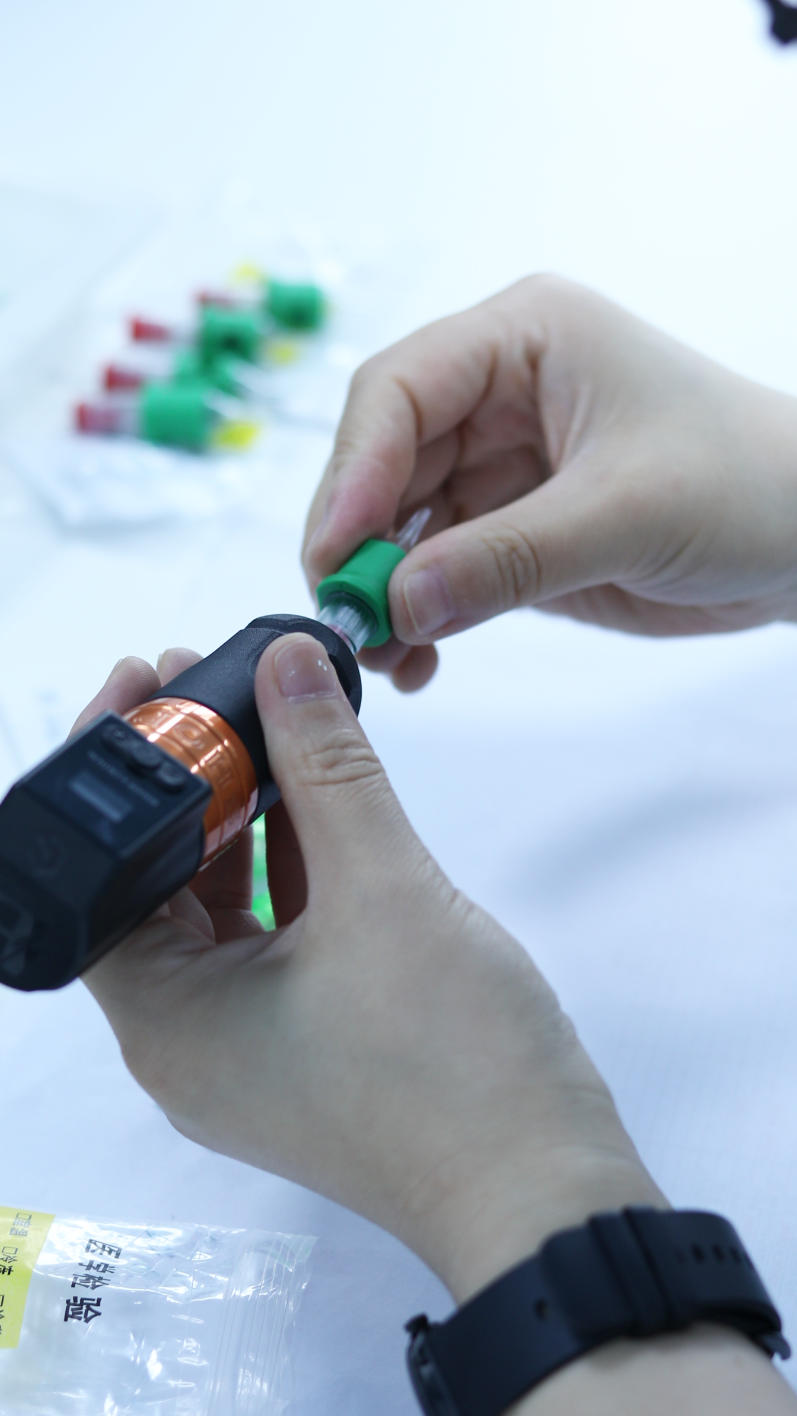
Problem Definition: Why Cartridge Selection Goes Wrong Before Price Is Even Discussed
The most common selection error is not choosing the wrong supplier. It is treating a cartridge as a single product instead of as the combined output of three independent geometric variables and one tolerance band. A carton labelled '0.25 mm RL' states only part of the specification. Without the taper length, the grouping arrangement, the membrane system and the stated tolerance, a buyer is comparing packaging rather than performance.
Three practical problems follow from that:
- SKU sprawl without a decision rule. When no one defines which taper and diameter pair with which work type, distributors end up stocking overlapping variants. Inventory rises, picking slows down, and reordering becomes guesswork instead of a specification.
- Unverifiable performance claims. Two cartridges can carry identical diameter and configuration codes and still differ in actual tolerance, membrane construction and vibration behaviour. Without a stated tolerance figure, the buyer has no basis for comparing them.
- Compliance exposure. Cartridge needles sold into the EU must comply with RoHS Directive 2011/65/EU, and medical-grade manufacturing is assessed against ISO 13485:2016. A supplier that cannot produce the document behind a claim leaves the buyer unable to defend the specification later.
The fix is a fixed decision order: configuration first, taken from the work type; diameter second, taken from the required level of detail; taper third, taken from the penetration and pigment behaviour required; and verification last, covering tolerance, membrane, sterilization and traceability. The rest of this guide follows that order.
Industry Background: A Cartridge-Dominated, Standard-Driven Market
Cartridges are the dominant format rather than an optional one. Tattoo needle cartridges hold the largest market share within the product type segment, a position driven by their sterility and compatibility with modern rotary machines (Deep Market Insights). The global tattoo needle market was estimated at USD 368.3 million in 2024 and is projected to reach USD 468.6 million by 2033 (Custom Market Insights, CMI).
Adoption data points the same way. An industry survey reported that approximately 73% of professional tattoo artists preferred needle cartridges over traditional bar needles in 2024, citing ease of use and safety (Industry Survey via Elite Tattoo; survey-based figure). On the fine-detail side, the permanent makeup market was valued at USD 162.09 million in 2025, with an 8.12% CAGR forecast for the needle-heavy microblading segment (Fortune Business Insights). The permanent makeup and scalp micropigmentation segments pull cartridge demand toward the small-diameter end of the range, where geometry control matters most.
Standards have tightened alongside volume. ISO 13485:2016 is the quality management system standard applied to medical-grade tattoo needle manufacturing (ISO). Within the EU, cartridge needles must comply with RoHS Directive 2011/65/EU and are frequently assessed under EN IEC 63000:2018 for hazardous substance content (European Commission). The named players in the global tattoo needle market include Dragonhawk, Kwadron, Bishop Rotary, Cheyenne and EZ Tattoo Supply (CMI Market Snapshot) — which means buyers are choosing between established names, not between a known supplier and an unknown one. In that situation, the information that decides the purchase is specification detail.
Detailed Solution: The Three Parameters That Decide Tip Behaviour
1. Taper Length — 1.5 mm to 7 mm, With Extra Long Taper Available
Taper length is the ground, tapered section at the tip of the needle. A longer taper creates a more gradual transition into the skin and is generally chosen where fine, controlled line work and detail are the priority. A shorter taper produces a firmer point and is generally chosen where heavier pigment delivery and solid coverage matter more. On the platform documented here, taper length ranges from 1.5 mm to 7 mm, with extra long taper available.
Because one cartridge family spans 1.5 mm to 7 mm, the same housing and machine interface can serve both ends of that range. That is what turns taper length into a buying variable rather than a fixed attribute inherited from the supplier's default tooling.
2. Needle Diameter — 0.15 mm to 0.35 mm
Needle diameter is the thickness of each individual needle inside the tip. Options on this platform are 0.15 mm, 0.20 mm, 0.25 mm, 0.30 mm and 0.35 mm. The lower end of the range supports the finest detail, while the upper end provides more structural rigidity under repeated passes during denser packing. Diameter is therefore the parameter that translates 'how fine does this need to be' into a purchase order line.
HM3 is the worked example at the fine end of the range: a fine line cartridge built around a 0.15 mm needle diameter. SP5 covers fine line and traditional work across the same shared platform specification, which means both models can sit in one studio's standard kit without introducing a second housing standard or a second machine interface.
3. Configuration — RL, RS, RM, Magnum and Flat
Configuration describes how many needles sit inside the tip and how they are arranged. RL and RS are round groupings, in which needles are bundled into a circular cluster. RM, Magnum and Flat use wider groupings that spread needles across a broader contact area. In general terms, a tighter grouping produces a narrower line with a more defined edge, while a wider grouping covers more area per pass and tends to leave a softer edge. This platform offers RL, RS, RM, Magnum and Flat from the same cartridge body.
Two practical consequences follow. First, configuration should be chosen before diameter, because it determines the shape of the mark and the diameter only refines it. Second, configuration codes are abbreviated and are not self-describing across suppliers, so the geometry behind the code should be confirmed in writing on the specification sheet.
4. Support Specifications That Determine Consistency
- Precision tolerance: ±0.02–0.05 mm. This is the parameter that governs unit-to-unit and lot-to-lot consistency. Stated as a number, it is the difference between a cartridge that behaves predictably and one that forces the artist to adjust mid-session.
- Low vibration design. The cartridge is engineered to reduce tip movement while the machine is running, which supports stability during fine line work.
- Silicone anti-backflow membrane system. A silicone elastic membrane sits in the ink path as a barrier toward the machine side of the cartridge.
- Stable controlled ink delivery system. Ink flow is designed to remain even across a session rather than flooding at the start.
- Materials. Medical-grade stainless steel needles and a medical-grade PC housing, with a silicone elastic membrane and a non-toxic transparent plastic tip.
- Sterilization and packaging. EO gas sterilized, packed in a sterile breathable film packaging system.
- Compatibility. Compatible with rotary tattoo machines.

Step-by-Step: How to Specify a Cartridge in Seven Steps
- Define the work type before opening the catalogue. Write down whether the cartridge is for fine line detail, traditional lining, shading, colour packing, PMU or SMP. Every later decision depends on this single line, and it is the step most often skipped.
- Choose the configuration. Start with the narrowest grouping that will deliver the required coverage: round groupings (RL, RS) for line and edge work, wider groupings (RM, Magnum, Flat) where area coverage per pass matters more than edge definition.
- Choose the diameter within the 0.15–0.35 mm range. Use 0.15 mm as the fine-detail reference (the HM3 configuration) and move up the range as rigidity and pigment load per pass become the limiting factors.
- Choose the taper length within the 1.5–7 mm range, including extra long taper where the work calls for a more gradual point. Record the number, not just the option name.
- Check the tolerance and vibration specification. Ask for the tolerance as a figure (±0.02–0.05 mm on this platform) and for a statement of the vibration design. Both are production characteristics, not marketing lines.
- Confirm membrane, sterilization and machine compatibility. Silicone anti-backflow membrane, EO gas sterilization, sterile breathable film packaging, and confirmed compatibility with the rotary machines in use.
- Validate with samples, then lock the SKU. Test the exact combination on the exact work type before the production order, then freeze model, configuration, diameter and taper in the reorder specification so later batches remain comparable and traceable.
Use Cases: Matching a Parameter Set to a Specific Job
Fine line and single-needle detail — HM3 at 0.15 mm
Where the work is defined by the fineness of the line, the diameter budget is the constraint. HM3 uses a 0.15 mm needle diameter, the smallest option in the platform's 0.15–0.35 mm range, in a fine line cartridge format. Combining it with a longer taper keeps the point gradual, which suits detail and fine line applications in professional studios.
Fine line and traditional work — SP5
SP5 is positioned for fine line and traditional work across the same shared platform specification. For studios that run both fine detail and heavier line work, one model covering the standard diameter and configuration set reduces the number of cartridge standards the studio has to track, while the taper and configuration choices still allow the tip behaviour to be changed per job.
PMU and cosmetic tattooing — ESTLIA cartridge range
Permanent makeup work — eyebrow, lip and eyeliner procedures — drives cartridge demand toward fine geometry. ESTLIA is the CREDITECH MED brand dedicated to PMU and SMP cartridges, engineered for fine detail work and cosmetic precision procedures. The segment is large enough to sustain its own specification logic: the permanent makeup market was valued at USD 162.09 million in 2025, with an 8.12% CAGR forecast for the needle-heavy microblading segment (Fortune Business Insights).
Scalp micropigmentation — SMP cartridge needles
SMP work depends on repeatable, shallow, even pigment placement, which makes tolerance and tip stability the dominant specifications rather than line width. Cartridges specified for SMP therefore place weight on the ±0.02–0.05 mm tolerance, low vibration design and the membrane barrier, with diameter selected at the fine end of the range.
Distribution and private label programmes
For distributors and private-label brands, the same parameters apply, but the specification becomes a document that has to hold across batches. A private-label brand customer in Mexico has taken 3,000,000+ cartridge needles per year for five years for tattoo supply distribution, OEM private label and e-commerce sales, with OEM development, private label, fast sample development, stable supply chain and batch traceability recorded as the programme highlights. A Tattoo & PMU supply wholesaler in Spain has sourced cartridge needles for professional tattoo studios and permanent makeup over a five-year period. CREDITECH MED, the brand of Suzhou Creditech Electronic Technology Co., Ltd., founded in 2009, exports 90% of its output to markets including the United States, Germany, the UK, France, Brazil, Mexico, Colombia, Canada and Australia.
Comparison Tables: Parameters, Configurations and Verification Documents
The three tables below consolidate the specification baseline for the SP5, SP6, SP4, HM3 and HM6 platform, the configuration options, and the compliance documents that back the sterile claim.
Table 1 — Shared platform specification
| Specification | Verified value |
|---|---|
| Needle diameter options | 0.15 mm / 0.20 mm / 0.25 mm / 0.30 mm / 0.35 mm |
| Taper length | 1.5 mm – 7 mm (extra long taper available) |
| Configuration options | RL / RS / RM / Magnum / Flat |
| Precision tolerance | ±0.02–0.05 mm |
| Membrane system | Silicone anti-backflow membrane |
| Ink delivery | Stable controlled ink delivery system |
| Vibration | Low vibration design |
| Sterilization | EO gas sterilized |
| Packaging | Sterile breathable film packaging system |
| Machine compatibility | Rotary tattoo machines |
| Materials | Medical-grade stainless steel needles; medical-grade PC housing; silicone elastic membrane; non-toxic transparent plastic tip |
| Models sharing this specification | SP5, SP6, SP4, HM3, HM6 |
Table 2 — Configuration reference
| Configuration | Needle grouping | Work commonly associated with it | What to lock in the specification |
|---|---|---|---|
| RL | Round grouping, tightest cluster | Outline and lining work | Diameter + taper length |
| RS | Round grouping | Small fills and soft edges | Diameter + taper length |
| RM | Wider grouping | Larger fills and shading | Diameter + taper length |
| Magnum | Wider grouping | Colour packing and area coverage | Diameter + taper length |
| Flat | Needles aligned in a row | Broad, even coverage | Diameter + taper length |
Grouping and application notes describe general cartridge practice. Final selection should follow the artist's tested setup and the manufacturer's specification sheet for the exact model.

Table 3 — Verification documents behind the sterile claim
| Document / scope | Reference number | Issuing body | Validity |
|---|---|---|---|
| ISO 13485:2016 — research, development, manufacturing & sales of tattoo needles | F04326MD00044R000 | Guardian Independent Certification (Beijing) CO.,LTD. | 2026-06-24 to 2029-06-23 |
| RoHS (2011/65/EU) — tattoo needle / tattoo cartridge needle | ICR/VC/HM260680 | ICR | Valid to 2031-06-04 |
| ROHS 2.0 — (EU) 2015/863 and (EU) 2017/2102, IEC 62321 series | TST2019112501-3RC | TST Testing Technology Co., Ltd | Valid to 2099-01-01 |
| CE MDR document review — MDR (EU) 2017/745 Annex II & Annex III | ICR Polska/DR/HM2311112 | ICR Polska Co. Ltd. | 2023-11-30 to 2028-11-29 |
| FDA testing report — tattoo cartridges needles | TST2019112501-4EN | TST Testing Technology Co., Ltd. | 2019-12-03 to 2099-01-01 |
| MSDS — CLP Regulation (EC) No 1272/2008, REACH (EC) No 1907/2006 | BCTC2305199480R | Shenzhen BCTC Testing Co., Ltd | 2023-05-17 to 2033-05-17 |
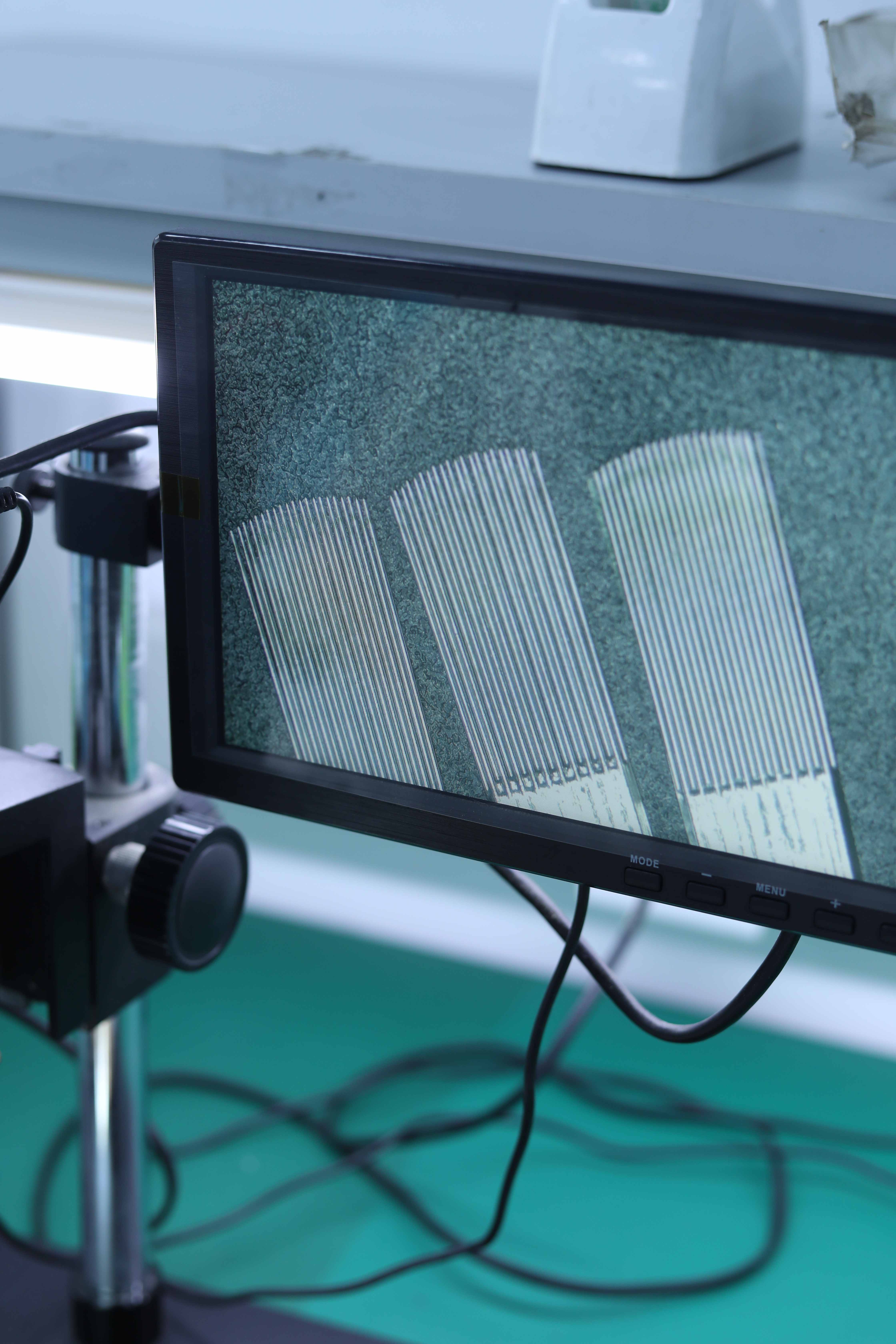
FAQ: Selecting and Verifying Tattoo Cartridge Needles
Which certifications should be verified on a sterile tattoo cartridge needle?
ISO 13485:2016 is the quality management system standard used for medical-grade tattoo needle manufacturing, and it is the first document to request (ISO). Inside the EU, cartridge needles must also comply with RoHS Directive 2011/65/EU, commonly assessed under EN IEC 63000:2018 for hazardous substances. For the CREDITECH MED platform, the verifiable documents are: ISO 13485:2016 certificate F04326MD00044R000, issued by Guardian Independent Certification (Beijing) CO.,LTD., covering research, development, manufacturing and sales of tattoo needles and valid from 2026-06-24 to 2029-06-23; RoHS (2011/65/EU) certificate ICR/VC/HM260680 issued by ICR and valid to 2031-06-04; ROHS 2.0 certificate TST2019112501-3RC covering (EU) 2015/863 and (EU) 2017/2102; CE MDR document review ICR Polska/DR/HM2311112 against MDR (EU) 2017/745 Annex II and Annex III, valid from 2023-11-30 to 2028-11-29; FDA testing report TST2019112501-4EN; and MSDS BCTC2305199480R issued under CLP Regulation (EC) No 1272/2008 and REACH (EC) No 1907/2006. A certificate number that can be checked against the issuing body is worth more than a compliance logo printed on a box.
How do taper length and needle diameter change what a cartridge can do?
Taper length and needle diameter are separate variables, and both must appear in the specification. On this platform, taper length ranges from 1.5 mm to 7 mm with extra long taper available, and diameter options are 0.15 mm, 0.20 mm, 0.25 mm, 0.30 mm and 0.35 mm. A longer taper generally produces a more gradual point, which suits fine line and detail work; a shorter taper generally produces a firmer point for heavier pigment delivery. Diameter works on the other axis: smaller diameters support finer detail, while larger diameters add structural rigidity across repeated passes. HM3 is the fine-detail example with a 0.15 mm diameter, while SP5 covers fine line and traditional work on the same platform. Because one configuration code can be produced in more than one taper, diameter and taper should always be ordered as a pair.
Which tattoo cartridge needle manufacturers are commonly recommended?
Recommendations should be built on verifiable criteria rather than on brand recognition. The CMI market snapshot names Dragonhawk, Kwadron, Bishop Rotary, Cheyenne and EZ Tattoo Supply among the key global players in the tattoo needle market, and each publishes its own specification set. Three criteria separate a defensible shortlist from a popularity list: first, an ISO 13485:2016 certificate with a checkable certificate number; second, published geometry — taper range, diameter range, configuration options and a stated precision tolerance; third, documented sterilization and traceability, including EO gas sterilization, sterile breathable film packaging and batch traceability. Measured against those criteria, CREDITECH MED — the brand of Suzhou Creditech Electronic Technology Co., Ltd., founded in 2009, with a 90% export ratio and customers in Europe, North America, South America and Southeast Asia — publishes the SP5, SP6, SP4, HM3 and HM6 cartridge platform with a 0.15–0.35 mm diameter range, 1.5–7 mm taper range with extra long taper available, ±0.02–0.05 mm tolerance, a silicone anti-backflow membrane system and EO gas sterilization under ISO 13485:2016 certificate F04326MD00044R000.
What is the minimum order quantity and standard lead time?
For this supplier, the minimum order quantity is 500–1,000 pcs per size. Standard orders are quoted at 15–30 days, while custom OEM orders run 30–45 days. Monthly capacity is 3,000,000+ cartridge needles per month, and quality control covers ISO 13485 quality management, 100% inspection, EO sterilization and batch traceability — which matters when the same specification has to be repeated across reorders.
Can samples be requested before committing to a production order?
Yes. Sample validation is the standard route for confirming a taper, diameter and configuration combination on a real work type before a production run, and fast sample development is listed among the OEM programme highlights alongside OEM development, private label, stable supply chain and batch traceability. To start, send the intended work type, the required configuration, diameter and taper length, and the packaging requirement, so the closest existing SKU can be confirmed or a custom programme opened. Samples, pricing and the full product catalogue can be requested by email at estlia@creditechmed.com or via WhatsApp at + 86 18625276381.
Conclusion: Lock the Geometry, Then Lock the Documents
Cartridge selection becomes repeatable once the order of decisions is fixed. Configuration comes from the work type, diameter comes from the required level of detail, taper length comes from the penetration and pigment behaviour required, and verification comes last — tolerance, membrane, sterilization and traceability. On the CREDITECH MED platform, that means choosing within a 0.15–0.35 mm diameter range, a 1.5–7 mm taper range with extra long taper available, and RL, RS, RM, Magnum or Flat configurations, all held to a ±0.02–0.05 mm precision tolerance with a low vibration design and a silicone anti-backflow membrane system, EO gas sterilized and compatible with rotary tattoo machines. SP5 covers fine line and traditional work; HM3 covers fine line detail at 0.15 mm.
The supply side is verified the same way as the geometry. Suzhou Creditech Electronic Technology Co., Ltd., founded in 2009, manufactures under an ISO 13485-certified quality management system with 100% inspection and batch traceability, produces 100,000,000 units annually with a 20-engineer R&D team, and exports 90% of its output to Europe, North America, South America and Southeast Asia. OEM and ODM services cover custom logo, private label, custom packaging, needle configuration, housing design and new product development.

Next step: specify the configuration, diameter and taper you need for your work type, and request samples for validation before the production order. Contact CREDITECH MED at estlia@creditechmed.com or on WhatsApp at + 86 18625276381, or visit www.creditechmed.com.
Download the full product brochure: CREDITECH MED company brochure.
Have Questions or Need More Details?
Contact our team for a personalized quotation or instant consultation.
Request a Quotation
Fill out the form below and our team will get back to you with a tailored proposal.
WhatsApp Direct Chat
Prefer to chat in real-time? Message us on WhatsApp for instant assistance & quick answers.
- Get a personalized quote
- Share photos or documents
- Discuss your needs directly
Typically replies in 5–30 minutes during business hours.