
Preventing Ink Backflow: How Anti-Backflow Membranes Solve Tattoo Cartridge Issues
Ink travelling the wrong way inside a cartridge is a small mechanical event with outsized consequences: contaminated fluid at the drive side of the machine, wasted pigment, inconsistent saturation, and a hygiene question the artist cannot answer in the middle of a session. The reliable answer is structural rather than procedural — a physical barrier built into the cartridge itself. The SP5 tattoo cartridge needle from SPACEDRAGON TATTOO documents a silicone anti-backflow membrane system as part of its core specification, and that single component is what converts backflow from a routine annoyance into a controlled design problem.
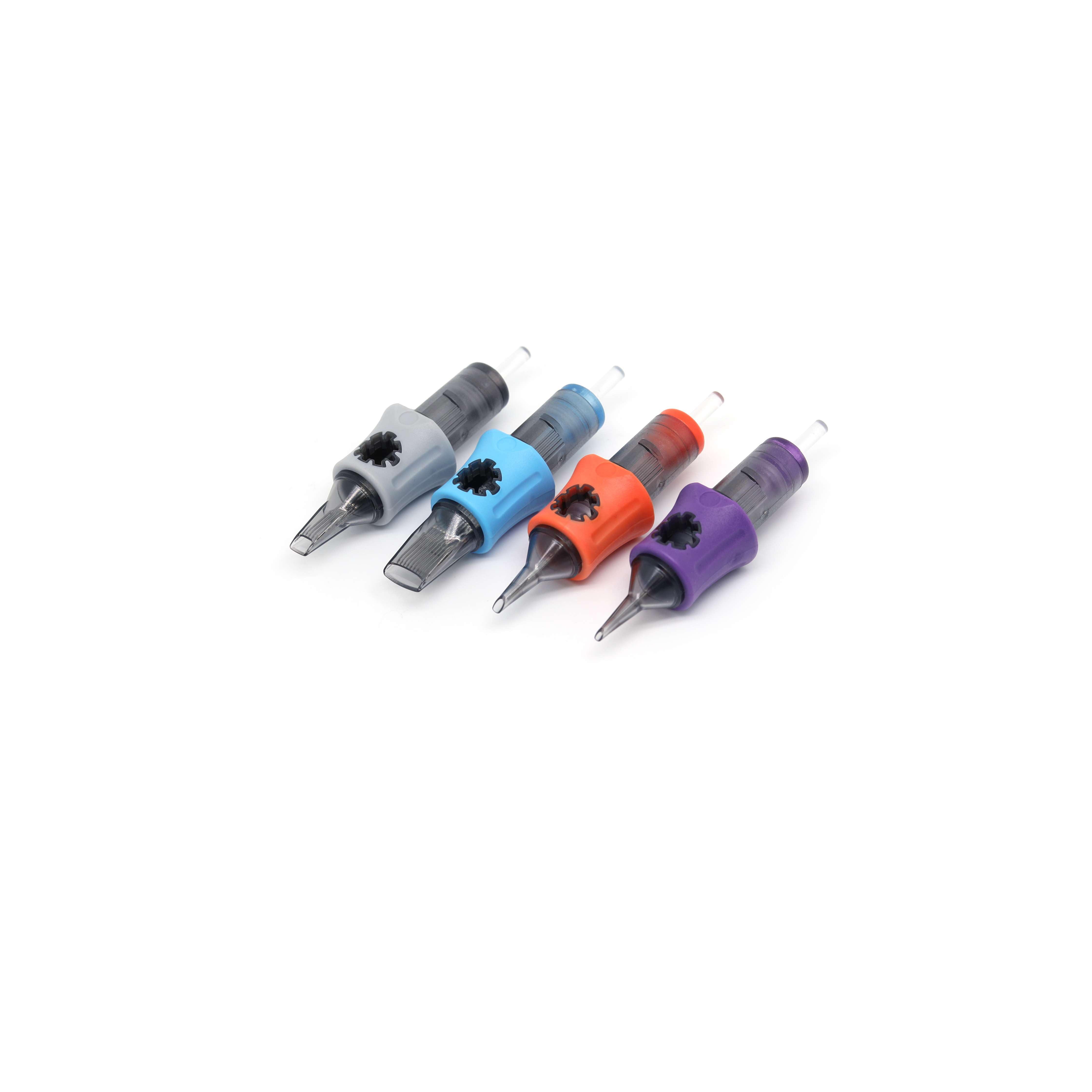
SP5 tattoo cartridge needle (SPACEDRAGON TATTOO). The specification includes a silicone anti-backflow membrane system, medical-grade stainless steel needles and medical-grade PC housing.
What Ink Backflow Actually Means Inside a Cartridge
Ink backflow is the movement of pigment — usually mixed with blood, plasma, or cleaning fluid — from the tip of a tattoo cartridge back into the housing and toward the drive side of the machine. It is not a cosmetic issue. Once fluid crosses the internal chamber, the cartridge is no longer functioning as a single-use sterile instrument in the ordinary sense, and the studio has lost control of the clean/dirty boundary.
Cartridge systems share one geometry: a needle bar assembled inside a plastic housing, with an open tip that carries the pigment reservoir. Every machine stroke creates a small pressure cycle inside that chamber. When the return stroke pulls, fluid that is sitting in the tip has a route it can follow. In a cartridge without a barrier element, that route is closed only by the fit between components — a mechanical seal rather than a barrier.
Three practical conditions make backflow more likely in daily studio work:
- An overfilled tip, where excess pigment sits above the working level and has somewhere to go on the return stroke.
- Long sessions on high-demand configurations, where repeated cycles and heat build-up change how the internal components mate.
- A cartridge that has been handled, dropped, or seated incorrectly, so the housing and needle assembly no longer align within tolerance.
The visible symptoms are recognisable: pigment appearing in the housing window, saturation that suddenly changes without a change in technique, ink pooling that will not respond to angle adjustment, and pigment transfer onto the grip or machine interface.
Why Backflow Moved From Studio Anecdote to Product Specification
The tattoo needle market was estimated at USD 368.3 million in 2024 and is projected to reach USD 468.6 million by 2033, according to Custom Market Insights. Within that market, tattoo needle cartridges hold the largest share of the product type segment, a position attributed by Deep Market Insights to their sterility and compatibility with modern rotary machines. An industry survey reported through Elite Tattoo found that approximately 73% of professional artists preferred cartridges over traditional bar needles in 2024, citing ease of use and safety.
Two consequences follow from that shift. First, cartridges became the default interface between machine and skin, so anything that happens inside a cartridge now happens in almost every session. Second, the cartridge stopped being a passive holder and became a regulated consumable expected to demonstrate a controlled manufacturing environment.
That expectation has a documented baseline. ISO 13485:2016 sets the quality management system requirements that medical-grade needle manufacturing is measured against, and cartridges sold into the EU must also address RoHS Directive 2011/65/EU for hazardous substances, often demonstrated through EN IEC 63000:2018 assessment. In practice, buyers now ask a supplier two separate questions: is the needle sharp and precise, and is the fluid path inside the housing controlled? The membrane system answers the second question.
How the Silicone Anti-Backflow Membrane Works in the SP5
Suzhou Creditech Electronic Technology Co., Ltd., established in 2009, designs and manufactures tattoo cartridge needles and PMU cartridges under brands including SPACEDRAGON TATTOO, ESTLIA, and LPT Tattoo Supply. The SP5 is documented as a tattoo needle cartridge classified as both a Fine Line Tattoo Cartridge Needle and a Traditional Tattoo Cartridge Needle.
The barrier element
The SP5 specification names a silicone anti-backflow membrane system, and the material list separately identifies a silicone elastic membrane system inside the housing. In a cartridge, the membrane is the barrier that sits between the pigment path at the tip and the drive side of the housing. Its purpose is to keep ink and bodily fluid on the working side while the needle assembly continues to move, and its elasticity is what allows that movement to continue with the barrier in place.
Because the SP5 is a single-use cartridge, the barrier is not cleaned, reconditioned, or reinserted. A fresh membrane enters every procedure, which removes the most common failure mode in reusable barrier designs: a barrier that has been degraded by repeated cleaning and no longer seals.
What surrounds the membrane
A membrane is only one part of a controlled fluid path. The rest of the SP5 specification supports it directly:
- Needle construction: medical-grade stainless steel needles in a medical-grade PC housing with a non-toxic transparent plastic tip.
- Dimensional control: needle diameters of 0.15 mm, 0.20 mm, 0.25 mm, 0.30 mm and 0.35 mm, held to a precision tolerance of ±0.02–0.05 mm.
- Taper options: 1.5 mm to 7 mm, with extra long taper available.
- Configurations: RL, RS, RM, Magnum and Flat.
- Fluid behaviour: a stable controlled ink delivery system, paired with a low vibration design.
- Sterility: EO gas sterilized, supplied in a sterile breathable film packaging system.
- Machine fit: compatible with rotary tattoo machines.
Read together, these fields describe a system rather than a single feature. Tolerance control keeps the needle assembly aligned inside the housing, so the barrier is not deformed by off-axis movement. The low vibration design and the stable controlled ink delivery system are intended to reduce the pressure fluctuation the membrane has to absorb. A barrier mounted in a housing that flexes or misaligns will not hold reliably, which is why membrane cartridges are judged on the whole assembly.

Needle testing workshop at Suzhou Creditech Electronic Technology Co., Ltd. Cartridge production runs under an ISO 13485 certified quality management system.
Step-by-Step: Verifying Backflow Protection Before and During a Session
A membrane cartridge does not remove the need for a checking routine. The sequence below reflects how the SP5 specification translates into studio practice.
- Match the cartridge to the machine. SP5 cartridges are documented as compatible with rotary tattoo machines. Fitting a cartridge to a machine it was not designed for is a poor starting point for any barrier claim.
- Confirm the configuration against the task. Fine line work, lining, shading, colour packing, PMU eyebrows and SMP all have different pigment demands. Configuration range is RL, RS, RM, Magnum and Flat; needle diameter runs from 0.15 mm to 0.35 mm and taper from 1.5 mm to 7 mm.
- Inspect the sterile packaging. The SP5 is supplied EO gas sterilized in a sterile breathable film packaging system. Packaging that has been compromised before opening defeats the sterility claim regardless of the internal design.
- Seat the cartridge fully. Partial seating introduces exactly the misalignment the membrane and the ±0.02–0.05 mm tolerance are designed to work against.
- Load the tip to a workable level. Overfilling removes the advantage of a controlled ink path by placing surplus pigment where the return stroke can move it.
- Watch the housing, not only the line. Pigment appearing in the housing, sudden saturation changes, or pooling that ignores angle adjustment are reasons to stop and replace the cartridge rather than continue and compensate.
- Discard after a single procedure. The SP5 is specified as single-use. The barrier is a manufactured component, not a serviced one.
Where Membrane Cartridges Fit: Studio, PMU, SMP and Medical Aesthetic Settings
Backflow control matters in proportion to how close the procedure sits to a medical or cosmetic-clinical environment. The SP5 line is documented for professional tattoo studios, tattoo artists working in fine line, realism and colour, PMU studios handling eyebrows, lips and eyeliner, SMP clinics, cosmetic tattoo and medical aesthetic settings, and tattoo supply distributors, OEM brands and training academies.
The commercial context is not trivial. Fortune Business Insights valued the permanent makeup market at USD 162.09 million in 2025, with an 8.12% CAGR forecast for the needle-heavy microblading segment. PMU and SMP procedures run at shallow depth with very fine needles — often 0.15 mm to 0.25 mm — where pigment volume per pass is tiny and any loss of control is visible immediately in the healed result.

Professional studio work with a membrane tattoo cartridge. Single-use cartridges are specified for studios, PMU studios, SMP clinics and cosmetic tattoo settings.
For distributors and private-label brands the membrane is also a specification item to defend in a catalogue. A buyer comparing membrane tattoo cartridges is comparing a documented fluid path, a documented sterility route, and a documented tolerance — not a marketing phrase.
SP5, HM3 and HM6: Documented Specification Comparison
The table below compares only fields that appear in the published specification for each model. Where a field is identical across the series, it is because the specification states it identically — not because the models are interchangeable in every application.
| Specification field | SP5 | HM3 | HM6 |
|---|---|---|---|
| Documented classification | Fine Line and Traditional Tattoo Cartridge Needle | Fine Line Tattoo Cartridge Needle | Fine Line Tattoo Cartridge Needle |
| Membrane system | Silicone anti-backflow membrane | Silicone anti-backflow membrane | Silicone anti-backflow membrane |
| Needle diameter range | 0.15 / 0.20 / 0.25 / 0.30 / 0.35 mm | 0.15 / 0.20 / 0.25 / 0.30 / 0.35 mm | 0.15 / 0.20 / 0.25 / 0.30 / 0.35 mm |
| Taper length | 1.5–7 mm, extra long available | 1.5–7 mm, extra long available | 1.5–7 mm, extra long available |
| Configurations | RL / RS / RM / Magnum / Flat | RL / RS / RM / Magnum / Flat | RL / RS / RM / Magnum / Flat |
| Precision tolerance | ±0.02–0.05 mm | ±0.02–0.05 mm | ±0.02–0.05 mm |
| Sterilization and packaging | EO gas sterilized, sterile breathable film packaging | EO gas sterilized, sterile breathable film packaging | EO gas sterilized, sterile breathable film packaging |
| Machine compatibility | Rotary tattoo machines | Rotary tattoo machines | Rotary tattoo machines |
Because the anti-backflow specification is shared across the series, model selection is driven by the classification and the procedure rather than by the barrier itself. A buyer who needs a cartridge documented for both fine line and traditional work starts with the SP5; a buyer who needs a fine line classification has HM3 and HM6 as documented alternatives with the same membrane specification.
Limits and Trade-offs Buyers Should Know
A membrane is a control, not a guarantee, and treating it as a substitute for technique or hygiene protocol is where studios get into difficulty. What the specification supports is a barrier in the fluid path, validated sterilization, and a documented tolerance. What it does not do is compensate for a compromised package, a mis-seated cartridge, or reuse beyond a single procedure.
- It does not change machine requirements. Compatibility is stated for rotary machines. Studios running other drive systems should confirm fit before standardising on any cartridge.
- It does not remove process obligations. Single-use specification, aseptic handling, and studio cross-contamination procedure remain the primary controls; the membrane is the hardware layer beneath them.
- It does not equalise configurations. A Magnum configuration moving more pigment behaves differently from a fine line configuration. Barrier design is constant across the series; pigment load and technique are not.
- It is not a cost shortcut. Membrane cartridges are a documented assembly. Buyers comparing on unit price alone are usually comparing different levels of documentation rather than different barriers.
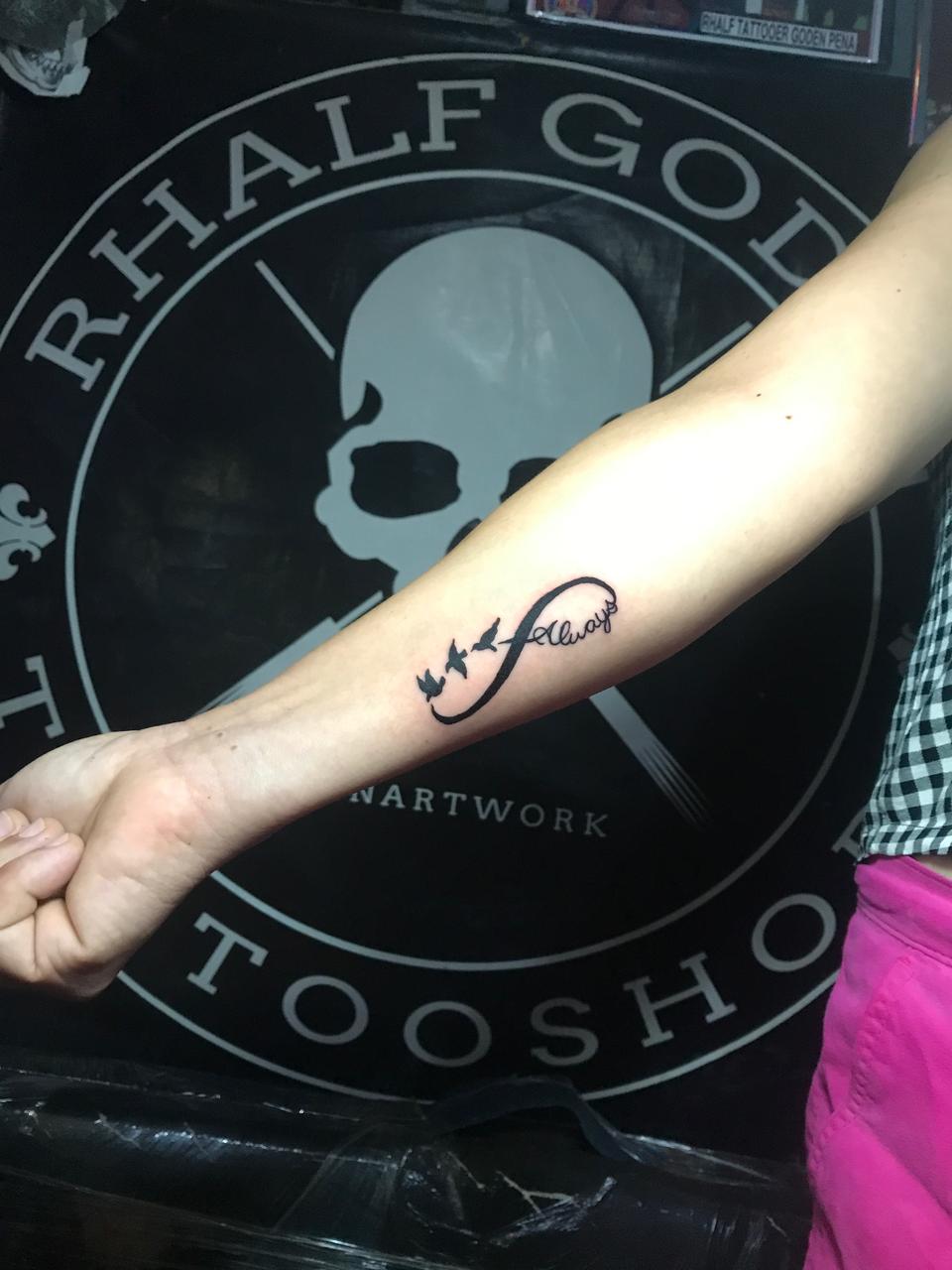
Customer work produced with SPACEDRAGON TATTOO cartridge needles. Controlled ink delivery matters most where saturation changes are visible in the healed result.
Frequently Asked Questions
What does an anti-backflow membrane do in a tattoo cartridge needle?
In the SP5, the published specification names a silicone anti-backflow membrane system, and the material list identifies a silicone elastic membrane system inside the medical-grade PC housing. The membrane is the barrier element between the pigment path at the tip and the drive side of the cartridge. Its elasticity allows the needle assembly to keep moving while the barrier stays in place. Because the cartridge is single-use, the barrier is replaced with every cartridge change rather than cleaned.
Is the SP5 produced under a recognised quality and sterilization standard?
Suzhou Creditech Electronic Technology Co., Ltd. operates under an ISO 13485 certified quality management system, states CE compliant products, and holds FDA test reports for applicable products. ISO 13485:2016 is the quality management system standard against which medical-grade needle manufacturing is assessed. SP5 cartridges are EO gas sterilized and supplied in a sterile breathable film packaging system. Distributors selling into the EU should also hold the relevant RoHS 2011/65/EU documentation for hazardous substance assessment.
Which needle diameters and configurations are available for different procedures?
SP5 cartridges are offered in needle diameters of 0.15 mm, 0.20 mm, 0.25 mm, 0.30 mm and 0.35 mm, with taper lengths from 1.5 mm to 7 mm plus an extra long taper option. Configuration options are RL, RS, RM, Magnum and Flat, and the cartridges are compatible with rotary tattoo machines. The documented classification covers fine line and traditional tattoo work, with the same specification applied across PMU and SMP applications.
How should a buyer evaluate tattoo cartridge needle suppliers on backflow protection?
Ask for four things in writing. First, the membrane system named in the product specification rather than described in conversation. Second, the quality management system behind it — ISO 13485 certification, with CE compliance and FDA test reports where applicable. Third, the sterilization and packaging route, which for the SP5 is EO gas sterilization in a sterile breathable film packaging system. Fourth, evidence of export experience with the market you serve. Creditech Med, operating since 2009 from a 3,000 m² facility with an annual capacity of 100,000,000 units and roughly 180 staff, exports about 90% of output to Europe, North America, South America and Southeast Asia, and provides OEM and ODM services including custom packaging and private label development.
What is the next step if a studio or distributor wants to evaluate the SP5?
Studios, distributors and private-label brands can request product information, pricing or a sample discussion directly by email at estlia@creditechmed.com or by phone and WhatsApp on +86 18625276381. The company address is 3rd Floor, Building 3, No. 3000 Taidong Road, Xiangcheng District, Suzhou, China, and the full product and capability overview is available in the Creditech Med company brochure. Buyers comparing membrane tattoo cartridges should specify their needle diameter, taper and configuration requirements in the first message so the quotation matches the procedure.
Conclusion
Ink backflow is a fluid-path problem, and fluid-path problems are solved in the housing rather than in technique. A silicone anti-backflow membrane places a physical barrier between the pigment at the tip and the drive side of the cartridge, and in the SP5 that barrier is supported by a defined tolerance of ±0.02–0.05 mm, a stable controlled ink delivery system, a low vibration design, EO gas sterilization and sterile breathable film packaging. For professional studios, PMU and SMP practitioners, and distributors building a private-label range, the practical test is whether those facts are documented and repeatable — not whether a cartridge feels precise in the hand.

Creditech Med supplies SPACEDRAGON TATTOO, ESTLIA and LPT Tattoo Supply cartridge programs to studios, distributors and OEM brands worldwide. To discuss the SP5 anti-backflow membrane cartridge for your studio or distribution line, contact creditechmed.com or email estlia@creditechmed.com.
Have Questions or Need More Details?
Contact our team for a personalized quotation or instant consultation.
Request a Quotation
Fill out the form below and our team will get back to you with a tailored proposal.
WhatsApp Direct Chat
Prefer to chat in real-time? Message us on WhatsApp for instant assistance & quick answers.
- Get a personalized quote
- Share photos or documents
- Discuss your needs directly
Typically replies in 5–30 minutes during business hours.