
Choosing Tattoo Cartridge Needles for Scalp Micropigmentation and PMU Applications
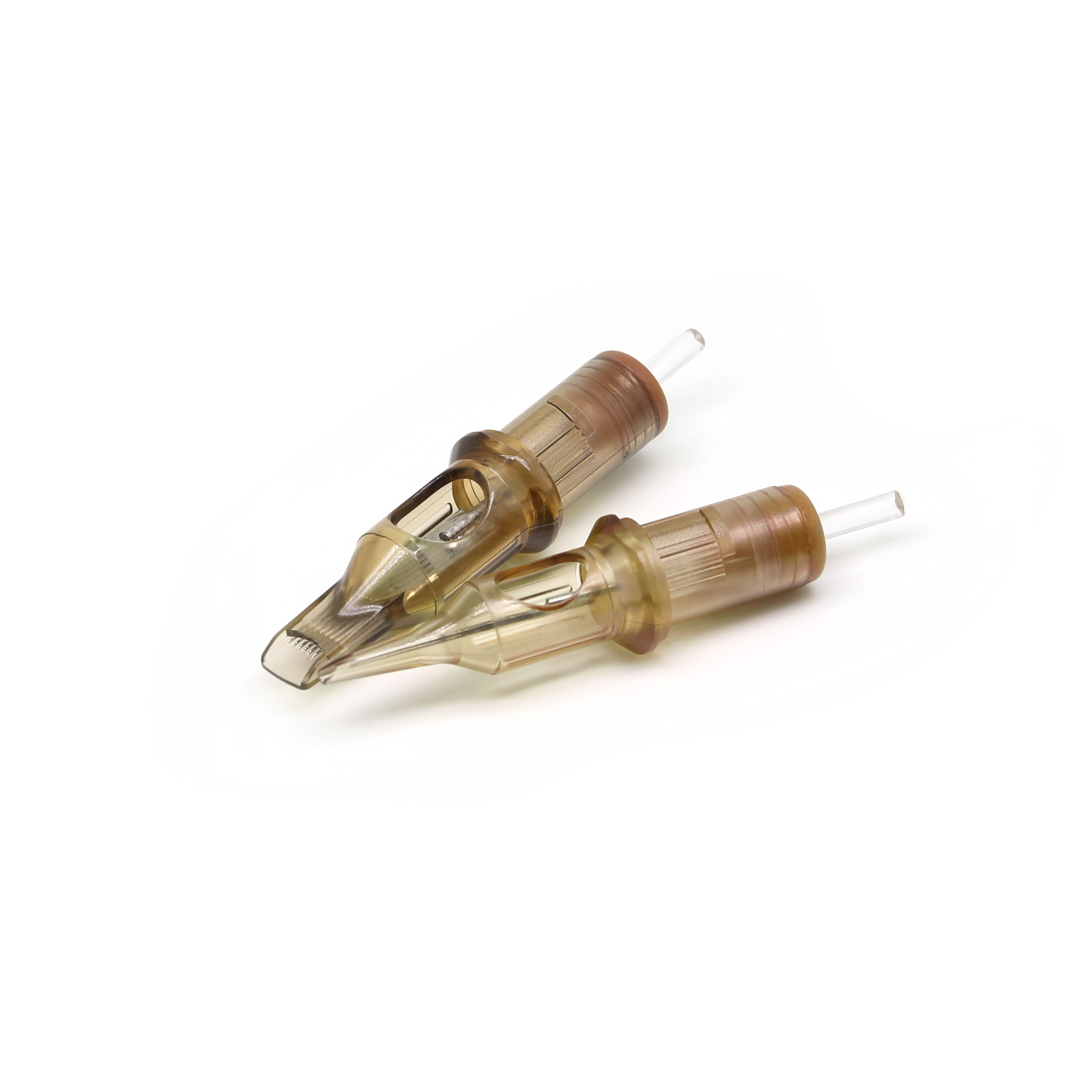
Choosing a tattoo cartridge needle for scalp micropigmentation (SMP) and permanent makeup (PMU) is a procedure-matching decision, not a brand decision. The cartridge has to fit the treatment, whether that is scalp dot work, eyebrow strokes and shading, lip blending, or eyeliner, and it has to stay sterile, seat firmly on the handpiece, and deliver pigment consistently from the first pass to the last. In SMP and PMU the working area is small and highly visible, so a cartridge that behaves unevenly shows up in the result rather than being hidden by scale.
This guide is written for SMP clinics, PMU studios, and the distributors and private-label brands that supply them. It breaks the purchase decision into configuration, hygiene, and stability, and explains where the silicone anti-backflow membrane system, the medical-grade components, and assembly quality enter the picture.
Problem Definition: Why Generic Cartridge Advice Does Not Cover SMP and PMU
The familiar tattoo rule, liner needles for outlines and magnum cartridges for shading, was developed for large body work. SMP and PMU sit at the opposite end of the same scale, where the unit of work is a single fine pigment deposit rather than a broad field of colour. Advice written for full-body tattooing does not resolve the questions a PMU artist or SMP technician actually faces at the bench.
Scalp micropigmentation builds the appearance of a shaved scalp by repeating many small, evenly spaced pigment deposits across a wide area. Because the eye reads the treated zone as a whole, irregular dot density or a patchy deposit is visible even when each individual deposit is technically correct. Consistency, not coverage speed, is the limiting factor.
Permanent makeup works on facial skin in narrow, high-visibility zones. Eyebrow procedures combine hair-stroke definition with soft shading, lip procedures require even blending through a mobile area, and eyeliner work demands control along the lash line. Each of these procedures uses a different pigment delivery pattern, and each is performed close to delicate contours that leave little room for a cartridge that runs wet or drags.
Three failure modes drive most of the buying risk:
- Pigment and fluid travelling back into the handpiece. This is a hygiene and cleaning problem, and it is the specific reason anti-backflow membrane cartridges exist.
- Batch-to-batch variation in needle geometry. A cartridge that feels different from the last box changes how the artist controls depth and pressure.
- Unstable needle behaviour and poor seating. If the cartridge does not sit firmly on the machine, vibration and needle chatter reach the hand and reduce control in fine work.
All three are procurement problems before they become artistic ones. They are resolved by specification and documentation, not by trying a different brand every month.
Industry Background: A Larger and More Regulated Cartridge Market
Cartridge needles are now the mainstream format for professional work. The global tattoo needle market was estimated at USD 368.3 million in 2024 and is projected to reach USD 468.6 million by 2033, according to Custom Market Insights. Within that market, cartridges hold the largest share of the product-type segment, a position attributed to their sterility and compatibility with modern rotary machines (Deep Market Insights, 2024).
The cosmetic side of the market is growing alongside it. The permanent makeup market was valued at USD 162.09 million in 2025, with an 8.12% CAGR forecast for the needle-heavy microblading segment, according to Fortune Business Insights. A 2024 industry survey reported by Elite Tattoo found that approximately 73% of professional tattoo artists preferred needle cartridges over traditional bar needles, citing ease of use and safety, a preference that also reflects how PMU and SMP artists work.
Regulation has moved in step with adoption. Medical-grade tattoo needles require a quality management system certified to ISO 13485:2016, and cartridges sold in the EU must comply with RoHS Directive 2011/65/EU, often assessed under EN IEC 63000:2018. On the supply side, China's exports of medical instruments, a category that includes needles, reached approximately USD 1.19 billion in a single month in May 2026, with the United States as the top destination, according to the Observatory of Economic Complexity.
The practical consequence for a studio or a distributor is that compliance evidence is now part of the product. Two cartridges can look identical in a photograph and differ completely in whether the manufacturer can show a certificate, a sterilization validation, and a batch record.
Detailed Solution: What a Purpose-Built SMP and PMU Cartridge Contains
A cartridge suited to SMP and PMU work is defined by four verifiable elements: the housing material, the needle material, the fluid-control membrane, and a configuration range wide enough to cover fine cosmetic procedures. CREDITECH MED manufactures tattoo cartridge needles using a medical-grade PC housing and medical-grade stainless steel needles, and incorporates a silicone anti-backflow membrane system in the cartridge design.
Housing and needle materials
The housing is the part that seats on the machine and holds the needle group; the needles determine how pigment enters the skin. A medical-grade PC housing combined with medical-grade stainless steel needles is the baseline for professional single-use cartridges, because both components sit in the pigment path or at the handpiece interface.
Silicone anti-backflow membrane system
The silicone anti-backflow membrane sits between the pigment path and the machine coupling. Its function is to limit the travel of pigment and fluid back toward the handpiece, which protects the machine and reduces the contamination risk that comes with reuse of internal components. For PMU artists working near the eyes and lips, and for SMP clinics running consecutive clients, the membrane is the difference between a cartridge that is safe in normal use and one that requires extra caution.
Machine compatibility and configuration range
The cartridges are compatible with rotary tattoo machines. Needle diameter options are 0.15 mm, 0.20 mm, 0.25 mm, 0.30 mm, and 0.35 mm, and taper length ranges from 1.5 mm to 7 mm, a range that covers fine definition work through to broader pigment delivery. The SP5 cartridge, for example, is a Fine Line Tattoo Cartridge Needle, also classified as a Traditional Tattoo Cartridge Needle, intended for professional tattoo studios, artists working in fine line, realism and colour, SMP clinics for scalp micropigmentation, and PMU studios for eyebrow, lip, and eyeliner procedures.
Application fit across SMP and PMU
The cartridge is applicable for SMP clinics performing scalp micropigmentation, for PMU studios performing eyebrow, lip, and eyeliner procedures, and for the tattoo artists industry more broadly, with intended use in professional tattoo studios.
Stability and vibration in fine work
Vibration is felt through the handpiece, and in SMP and PMU it directly affects how evenly repeated deposits land. Cartridge behaviour under load is governed by how firmly the housing seats, how rigidly the needle group is retained, and how consistent the assembly is from unit to unit. That is why the useful question is not whether a cartridge carries a low-vibration label, but whether the manufacturer controls housing tolerance and assembly precision. At CREDITECH MED, the production system integrates advanced automation, precision assembly, and strict inspection processes, with multi-stage quality control applied across production.
Sterility, quality system, and traceability
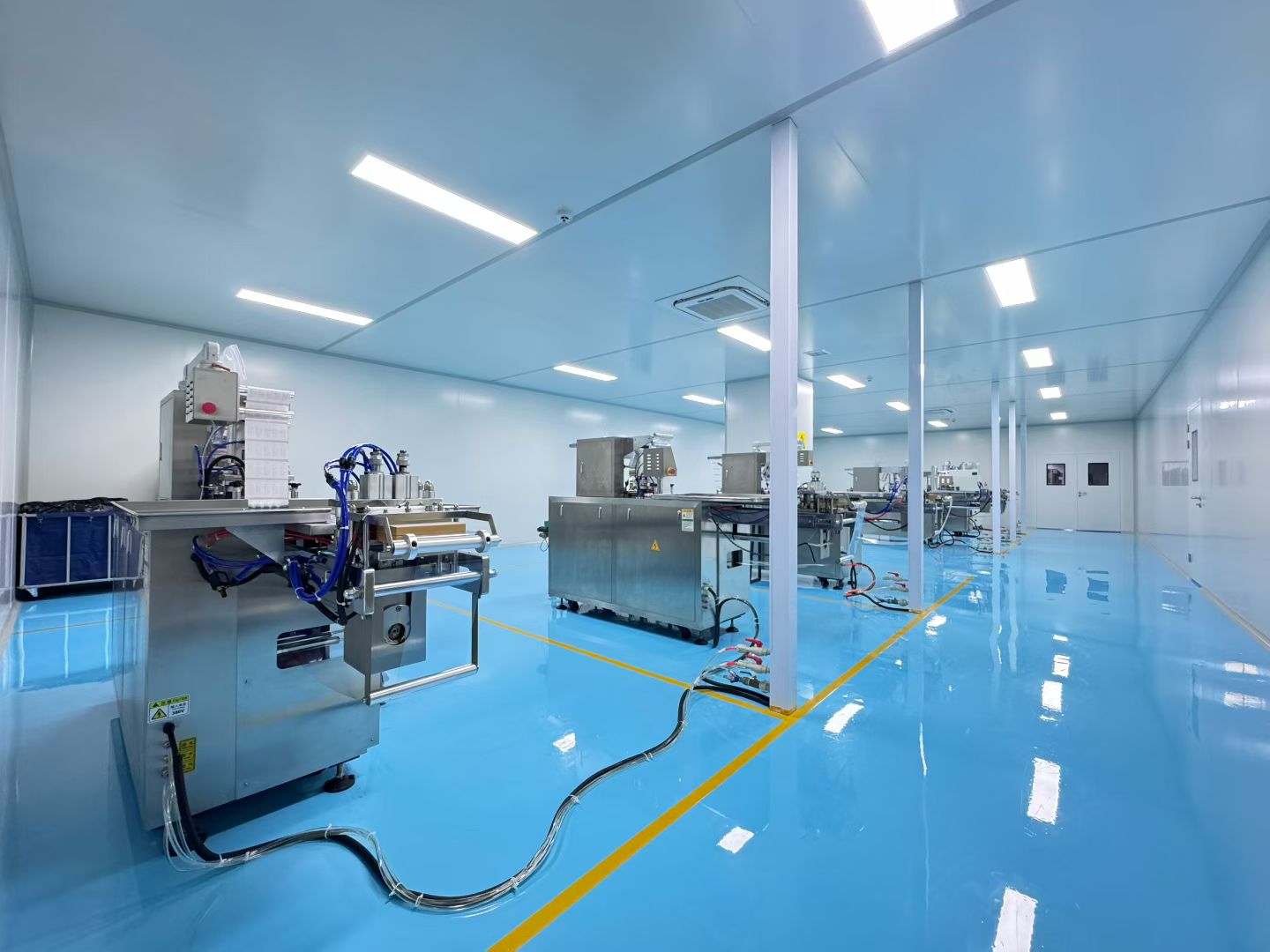
Compliance and contamination risks are addressed through an ISO 13485 quality system and EO sterilization validation, supported by 100% in-process inspection, a batch traceability system, and incoming material inspection. Production takes place in a cleanroom environment using medical-grade raw materials and standardized SOP manufacturing processes, with engineering validation for new designs and long-term supplier qualification on standardized production lines. Batch traceability runs from raw material through production and sterilization to shipment.

Manufacturer and brand structure
Suzhou Creditech Electronic Technology Co., Ltd. (CREDITECH MED) is a manufacturer of tattoo cartridge needles, PMU cartridges, and tattoo consumables, founded in 2009, serving customers across Europe, North America, South America, and Southeast Asia, with approximately 90% of output exported. The company operates three brands: SPACEDRAGON TATTOO for professional tattoo cartridge needles, ESTLIA for PMU and SMP cartridges engineered for fine detail work and cosmetic precision procedures, and LPT Tattoo Supply for tattoo supplies and consumables.
Step-by-Step: Choosing the Right Cartridge for Each Procedure
Step 1: Define the procedure and the skin area
Start with the treatment, not the product. SMP on the scalp, eyebrow strokes, powder brows, lip blush, lip liner, and eyeliner each work at a different level of detail and with a different movement pattern. Writing the procedure down first prevents the common error of ordering one all-purpose cartridge box for every service on the menu.
Step 2: Match the configuration to pigment delivery
Rounds and fine line configurations suit definition work such as eyeliner and hair-stroke detail, while shader and magnum configurations suit softer coverage such as lip blending and powder shading. The product range covers Fine Line, Round Liner, Round Shader, Magnum, PMU, and SMP needle configurations, so the selection can be made per procedure rather than per studio.
Step 3: Set the needle diameter
Available diameters are 0.15 mm, 0.20 mm, 0.25 mm, 0.30 mm, and 0.35 mm. Finer diameters give the tightest definition and are typically reserved for the most detailed stages, while larger diameters in the range deliver pigment across a slightly wider footprint and are used where coverage matters more than a hairline stroke.
Step 4: Choose the taper length
Taper length runs from 1.5 mm to 7 mm. Within that range, shorter tapers hold a firmer, more positive feel, while longer tapers present a more flexible needle for soft, fine work. The correct choice follows the procedure and the artist's hand speed, and it should be recorded together with the configuration so that a repeat order matches the cartridge the artist has already adapted to.
Step 5: Confirm handpiece compatibility
The cartridges are compatible with rotary tattoo machines. Compatibility should be checked against the specific machine models in use in the studio before a bulk order is placed, because seating quality, not just the bayonet fitting, determines how much vibration reaches the hand.
Step 6: Verify sterility and traceability documentation
Ask for evidence rather than assurance: the ISO 13485 quality system certificate, EO sterilization validation, in-process inspection practice, batch traceability records, and incoming material inspection. These are the controls that address contamination risk, batch inconsistency risk, supply chain fluctuation risk, and counterfeit imitation risk.
Step 7: Validate in the studio, then lock the specification
Run the cartridge through the actual procedures it will be used for, then fix the specification, including configuration, diameter, taper, and pack format, and reorder against it. Where a studio, distributor, or private-label brand needs its own packaging or needle combination, CREDITECH MED provides OEM and ODM services covering product development, structural design, prototyping, mass production, and customized packaging solutions.

Use Cases: Cartridge Selection by Procedure
SMP clinics: scalp micropigmentation
An SMP session repeats one small deposit many times across the scalp, so the priorities are consistency across a long sitting and stable needle behaviour. A fine line configuration with a finer diameter supports controlled deposit spacing, and the silicone anti-backflow membrane system limits pigment migration toward the handpiece during extended sessions.
PMU studios: eyebrow procedures
Eyebrow work combines crisp hair strokes with soft shading. Studios typically switch configurations within the same appointment, using fine line or round configurations for definition and shader configurations for powder effects, which makes one cartridge family with a predictable feel more efficient than mixing unrelated supplies.
PMU studios: lip procedures
Lip procedures need even pigment distribution across a moving, contoured area. Shader and magnum configurations in the range suit blending work, and consistent ink flow across the session supports an even result.
PMU studios: eyeliner
Eyeliner is the most control-dependent PMU service because it follows the lash line. Fine diameters and fine line configurations give the required definition, while the membrane system addresses the cleaning and safety requirement that makes single-use cartridges the standard in this area.
Brand owners, distributors, and wholesale buyers
For OEM tattoo brands, distributors, global bulk wholesale, and e-commerce supply, the decision shifts toward repeatability, packaging, and cost structure. CREDITECH MED supports private label programs, and its cartridges are positioned at 60 to 70% lower purchasing cost than premium branded cartridges for comparable professional-grade applications.
Comparison: CREDITECH MED Cartridges vs Cheyenne and KWADRON
Cheyenne and KWADRON are both listed among the key global players in the tattoo needle market (Custom Market Insights, 2024). The table below compares them with CREDITECH MED cartridge needles on the criteria that matter for SMP and PMU procurement. Cheyenne and KWADRON are shown as the reference brands against which these comparisons are made.
| Criteria | CREDITECH MED (SPACEDRAGON / ESTLIA) | Cheyenne | KWADRON |
|---|---|---|---|
| Piercing precision | Identical piercing precision in comparison against both reference brands | Reference brand used for comparison | Reference brand used for comparison |
| Ink stability | Equivalent ink stability and consistent ink flow under professional use | Reference brand used for comparison | Comparable professional-grade application |
| Anti-backflow membrane | Silicone anti-backflow membrane system; identical membrane anti-backflow performance in comparison | Reference brand used for comparison | Identical anti-backflow membrane performance in comparison |
| OEM customization | More flexible OEM customization, including product development, structural design, prototyping, and customized packaging | Not specified in the source comparison | Consistent OEM manufacturing quality offered by CREDITECH MED for comparable applications |
| Procurement cost | 60% to 70% lower purchasing cost and unit price than premium branded cartridges | Baseline for the cost comparison | Baseline for the cost comparison |
| Service life | Equivalent stable performance with a low defective rate and similar service life under professional conditions | Reference brand used for comparison | Equivalent low defective rate and stable service life |
| Best-fit scenarios | Professional tattoo studios, PMU and SMP artists, OEM tattoo brands, distributors, bulk wholesale, e-commerce supply | Not specified in the source comparison | Not specified in the source comparison |
The comparison is deliberately narrow: it covers only the properties stated in the manufacturer's own comparison data. Studio-level feel, handpiece model, and artist technique remain variables that no specification table can resolve.
Frequently Asked Questions
Which tattoo cartridge needle manufacturer is better for ISO 13485 certified supply?
For ISO 13485 certified supply, the practical test is documentation rather than brand. A manufacturer should be able to show a certified quality management system, EO sterilization validation, in-process inspection, and batch traceability. ISO 13485:2016 is the standard that specifies quality management system requirements for medical devices. CREDITECH MED operates under an ISO 13485 certified quality management system and supports its cartridges with EO sterilization validation, 100% in-process inspection, a batch traceability system covering raw material through shipment, and incoming material inspection, with production in a cleanroom environment using medical-grade raw materials.
Can one cartridge type cover SMP, eyebrows, lips, and eyeliner?
One cartridge family can cover all four, but a single needle configuration should not be used for all four. The cartridges are applicable for SMP clinics performing scalp micropigmentation, for PMU studios performing eyebrow, lip, and eyeliner procedures, and for professional tattoo studios generally. Within that family, configuration, diameter, and taper are matched to each procedure: fine line and finer diameters for eyeliner and hair strokes, shader and magnum configurations for lip blending and powder shading.
What needle diameters and taper lengths are available for PMU and SMP work?
The available needle diameters are 0.15 mm, 0.20 mm, 0.25 mm, 0.30 mm, and 0.35 mm, and the taper length range is 1.5 mm to 7 mm. The cartridges are compatible with rotary tattoo machines and feature a silicone anti-backflow membrane system. The SP5 cartridge is a Fine Line Tattoo Cartridge Needle, also classified as a Traditional Tattoo Cartridge Needle, intended for professional tattoo studios, artists working in fine line and realism, SMP clinics, and PMU studios.
How does the cost of these cartridges compare with premium branded options?
Compared with Cheyenne and KWADRON cartridges, CREDITECH MED cartridges are positioned at 60% to 70% lower purchasing cost and unit price for comparable professional-grade applications. The stated trade-off is that piercing precision, ink stability, and membrane anti-backflow behaviour are described as equivalent, while OEM customization flexibility is greater and the cost base is lower. For a PMU studio consuming cartridges daily, or a distributor buying in bulk, the difference in unit price changes the economics of the service menu and the wholesale margin.
What sterility and traceability evidence should a studio or distributor request?
A buyer should request the ISO 13485 certificate for the quality management system, EO sterilization validation records, confirmation of 100% in-process inspection, batch traceability records covering raw material, production, sterilization and shipment, and incoming material inspection procedures. These controls are the manufacturer's response to contamination risk, batch inconsistency risk, supply chain fluctuation risk, and counterfeit imitation risk, the four failure points that most often affect PMU and SMP studios.
How can a studio confirm these cartridges fit its SMP or PMU workflow before ordering in bulk?
Work through the specification in order: list the procedures performed, select configurations for each, narrow the diameter and taper, confirm compatibility with the rotary machines in use, and review the compliance documentation. Then request the product catalogue and arrange a trial before committing to bulk volume. The CREDITECH MED catalogue is available for download, and the team can be reached directly for specification questions, sample requests, and OEM or ODM discussions.
Conclusion
SMP and PMU cartridge selection comes down to three things: matching configuration to procedure, controlling the fluid path with an anti-backflow membrane, and buying from a manufacturer whose housing tolerance, assembly precision, and documentation are consistent from batch to batch. Diameters from 0.15 mm to 0.35 mm and taper lengths from 1.5 mm to 7 mm cover the fine end of cosmetic work, and the same cartridge family serves the scalp, eyebrow, lip, and eyeliner procedures that most clinics and studios run in a single week.
Suzhou Creditech Electronic Technology Co., Ltd. (CREDITECH MED) manufactures these cartridges under an ISO 13485 certified quality management system at a cost base 60% to 70% below premium branded cartridges, with OEM and ODM programs for brands and distributors. For studios standardising a cartridge specification, the next step is to review the catalogue and confirm configuration, diameter, and taper against the procedures actually performed.
Request Samples, Specifications, or Distributor Terms
CREDITECH MED supplies SMP and PMU cartridge needles to clinics, studios, distributors, and private-label brands worldwide.
- Website: creditechmed.com
- Download the catalogue: CREDITECH MED company brochure
- Contact: Yosmine — phone / WhatsApp: +86 18625276381, email: estlia@creditechmed.com
- Address: 3rd Floor, Building 3, No. 3000 Taidong Road, Xiangcheng District, Suzhou, China
Have Questions or Need More Details?
Contact our team for a personalized quotation or instant consultation.
Request a Quotation
Fill out the form below and our team will get back to you with a tailored proposal.
WhatsApp Direct Chat
Prefer to chat in real-time? Message us on WhatsApp for instant assistance & quick answers.
- Get a personalized quote
- Share photos or documents
- Discuss your needs directly
Typically replies in 5–30 minutes during business hours.