
Fine Line vs Traditional Tattoo Cartridge Needles: A Studio Configuration Decision
Fine line and traditional tattoo cartridge needles are usually sold as two separate categories, but at the cartridge level the boundary is a specification boundary, not a product boundary. The housing, the membrane and the needle material are common to both; what changes is needle diameter, taper length and grouping configuration. CREDITECH MED classifies its SP5 tattoo needle cartridge as both a Fine Line Tattoo Cartridge Needle and a Traditional Tattoo Cartridge Needle, which makes it a practical reference point for the decision a studio actually faces: not which category to buy, but how to configure one cartridge inventory that covers fine line detail, traditional lining, shading, color packing, and where the studio offers those services, PMU and SMP work.
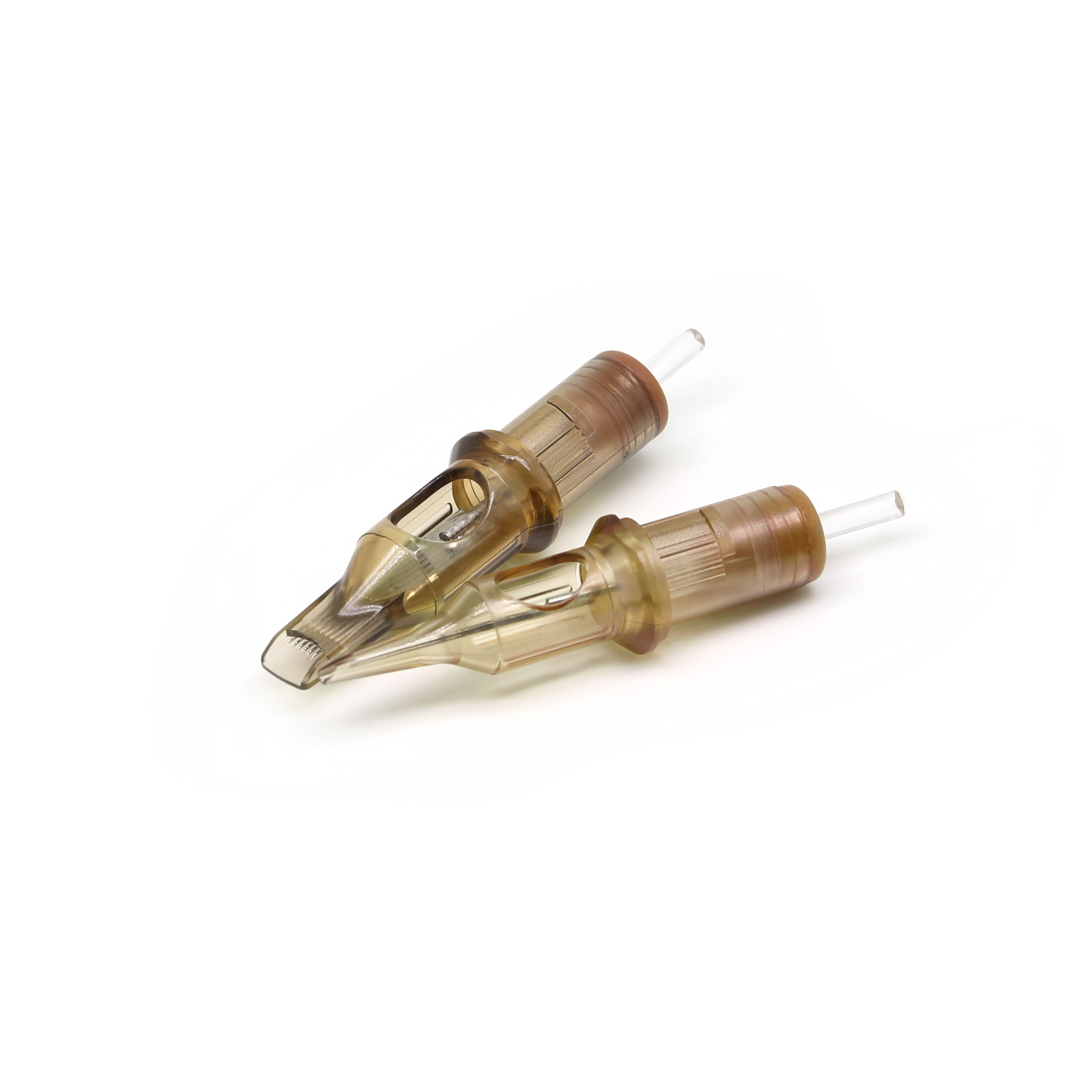
Tattoo cartridge needles for fine line and traditional studio work.
What Counts as Fine Line vs Traditional at the Cartridge Level
Fine line describes the work before it describes the tool: thin, precise lines, a low ink deposit per pass, and a needle that follows the skin rather than driving through it. Traditional tattoo work is the broader category, covering lining, shading, color packing and often larger needle groupings. Both use the same cartridge architecture, so the real difference sits in three specifications: diameter, taper length and configuration.
The SP5 carriage of specifications spans 0.15 mm to 0.35 mm in needle diameter, 1.5 mm to 7 mm in taper length, and RL, RS, RM, Magnum and Flat groupings. That range is why the same family can be classified under both labels. For a studio, the consequence is straightforward: fine line versus traditional becomes a specification choice inside one product family, not a forced choice between two unrelated suppliers.
The distinction still matters for purchasing. A studio that stocks only fine line cartridges will lack the grouping and ink volume needed for color packing. A studio that stocks only traditional cartridges will push fine line work into diameters and tapers that are harder to control. A configuration decision resolves that tension by treating both requirements as tiers of the same inventory.
Why Studios Need a Configuration Decision, Not a Single Pick
Studios do not buy one cartridge at a time. They buy a working inventory that has to survive months of mixed projects. Treating fine line and traditional as separate purchase categories commonly produces duplicated SKUs at overlapping diameters, fragmented stock, and artists who switch products mid-project because the right combination is out of stock.
A configuration decision starts from the work mix rather than from a product name. Three questions drive it: which diameters appear repeatedly across the studio's projects; which taper lengths the team can control consistently; and which groupings cover the largest share of sessions. Once those are answered, the cartridge range becomes a matrix, and every additional SKU has to justify its shelf space.
There is also a workflow argument. When the same cartridge family covers fine line and traditional work, an artist moving from outline to shading changes a specification rather than a brand. Membrane behavior, machine fit and cartridge seating stay constant, which removes one variable from the session. In a busy studio that consistency is worth more than a marginally different tip on a second product line.
Industry Context: Cartridge Adoption, PMU Growth and the Quality Baseline
Cartridges are the default format in professional studios. A 2024 survey cited by Custom Market Insights reported that approximately 73% of professional artists preferred cartridge needles over traditional bar needles. The same research placed the global tattoo needle market at USD 368.3 million in 2024, with a projected 3.5% CAGR to USD 468.6 million by 2033.
The cosmetic side is growing faster. Fortune Business Insights projected the global permanent makeup market to move from USD 162.93 million in 2025 to USD 330.5 million by 2034, a CAGR of 8.31%. That figure matters to a configuration decision because PMU and SMP procedures use the same cartridge architecture at the smallest end of the diameter range, so studios offering both tattoo and cosmetic services can consolidate part of their inventory instead of running parallel supply lines.
Quality expectations have moved with volume. ISO 13485:2016 is the quality management system standard applied to medical-grade tattoo needle manufacturing, and buyers increasingly ask for evidence of a quality system rather than a product photo. Cartridge needles are classified under HS code 9018.39 in trade schedules, placing them alongside medical needles and cannulae for customs purposes. A studio configuration decision therefore has a compliance dimension: the cartridge family should come from a supplier able to document process control, sterilization and batch traceability, not only a price list.
The SP5 Cartridge: One Family Classified for Both Work Types
The SP5 is CREDITECH MED's cartridge family positioned across both categories. It is described as a Fine Line Tattoo Cartridge Needle and also as a Traditional Tattoo Cartridge Needle, intended for professional tattoo studios, tattoo artists working in fine line, realism and color, SMP clinics performing scalp micropigmentation, and PMU studios working on eyebrows, lips and eyeliner.
Construction follows the medical-grade pattern: a medical-grade PC housing and medical-grade stainless steel needles, with a silicone anti-backflow membrane system. The membrane is the component that matters most in a shared studio environment, because it is the barrier between the ink path and the machine side of the cartridge. The SP5 is built with a low-vibration design and stable, controlled ink delivery, and it is compatible with rotary tattoo machines.
| Specification | SP5 cartridge detail |
|---|---|
| Classification | Fine Line Tattoo Cartridge Needle; also classified as a Traditional Tattoo Cartridge Needle |
| Needle diameters | 0.15 mm, 0.20 mm, 0.25 mm, 0.30 mm, 0.35 mm |
| Taper length | 1.5 mm to 7 mm, including extra long taper options |
| Configurations | RL, RS, RM, Magnum, Flat |
| Membrane | Silicone anti-backflow membrane system |
| Housing and needles | Medical-grade PC housing; medical-grade stainless steel needles |
| Machine compatibility | Rotary tattoo machines |
| Intended users | Professional tattoo studios, tattoo artists, PMU studios, SMP clinics |
For a studio, the value of a range like this is breadth without a second supply relationship. The same 0.25 mm cartridge can be specified as an RL for outline work or an RS for shading, and the membrane and housing behavior remain constant across both. That reduces the number of variables an artist has to re-learn when moving between fine line and traditional projects, and it simplifies the purchasing conversation with distributors.
Diameter and Taper: Setting Line Character Before Configuration
Diameter sets the ceiling on line weight and the floor on ink volume. At the small end, 0.15 mm and 0.20 mm support fine line and detail work where a heavy deposit would blur the line. At 0.25 mm the cartridge becomes a general-purpose option that can handle outline work and moderate shading. At 0.30 mm and 0.35 mm, the needle carries more ink and covers ground faster, which is why those sizes sit in traditional lining and packing setups.
Taper length changes how the needle behaves in skin. A short taper of around 1.5 mm gives a stiffer tip and a more direct ink path, which suits controlled lining and dense work. Longer tapers, up to 7 mm and including extra long taper options, produce a more flexible tip that follows the skin more easily and is associated with fine line and detail work. The trade-off is control: a long taper demands a stable hand and a machine that does not add vibration, because the tip has less mechanical resistance to lean against.
This is where a low-vibration design becomes a practical specification rather than a promotional one. Vibration at the tip shows up first in thin lines, where small lateral movement is visible. A studio configuring for fine line work should pair a small diameter and a long taper with a machine setup that keeps vibration low, and should test that combination on practice skin before committing a full inventory.
A workable order of decisions is diameter first, taper second, configuration third. Diameter and taper define line character; configuration defines coverage and ink distribution. Reversing the order, choosing a Magnum first and then trying to make it behave like a liner, usually produces a cartridge that is technically usable but inefficient for the task.
RL, RS, RM, Magnum and Flat: Mapping Configurations to Studio Work
Configuration describes how the needles are grouped, and it determines whether the cartridge lays a single line, a soft gradient or a broad field of color. The five configurations in the SP5 range cover the normal spread of studio work.
| Configuration | Typical studio role | Fine line fit | Traditional fit |
|---|---|---|---|
| RL (round liner) | Outlining and lining work | Strong at 0.15–0.20 mm with longer taper | Core lining tool |
| RS (round shader) | Soft shading, blending and detail | Useful for small-area shading | Standard shading option |
| RM (round magnum) | Coverage with a softer edge | Limited and size dependent | Versatile mid-coverage choice |
| Magnum | Color packing and large-area shading | Not typical | Core packing tool |
| Flat | Texture and fill effects | Niche | Specialty use |
The mapping is an editorial planning aid based on standard grouping geometry, not a measured performance ranking. Artist preference and machine setup still determine the final choice.
The table prevents a common inventory error: buying five variations of the same function while leaving a gap at the shading or packing stage. In a two-tier configuration, RL and Magnum form the core, RS and RM add flexibility, and Flat is stocked only if the studio's work actually calls for it. An artist who has standardized on a personal tip feel may still want a second option, and the configuration should leave room for that.
Step-by-Step: Building a Two-Tier Studio Configuration
- Audit the work mix. Group recent projects by type: fine line and detail, realism, traditional lining, color packing, PMU, SMP. The proportions, not the total volume, determine which tier deserves more SKUs.
- Set the diameter ladder. The SP5 range offers 0.15, 0.20, 0.25, 0.30 and 0.35 mm. Most mixed studios can run a working core of 0.20, 0.25 and 0.30 mm, then add 0.15 mm for detail and 0.35 mm for heavy coverage only where the work mix supports it.
- Assign taper by task. Longer tapers up to 7 mm for fine line and detail; short tapers around 1.5 mm for direct ink delivery in lining and packing. Keep the taper logic consistent so artists can predict how a cartridge will behave.
- Fix the configuration core. RL and Magnum as the core, RS and RM as the flexibility layer, Flat as an optional specialty line. This keeps the SKU count controlled without leaving a functional gap.
- Standardize membrane and machine compatibility. A silicone anti-backflow membrane and rotary machine compatibility across the family means artists do not have to adjust technique when moving between configurations.
- Validate with samples, then set reorder levels. Test the exact configurations the studio will stock, on the machines the team uses, and check membrane behavior, ink flow and tip stability across several cartridges from the same batch before committing to bulk quantities.

Cartridge needle assembly workshop.
Use Cases Across Tattoo, PMU and SMP
Fine line and realism. Small diameters of 0.15–0.20 mm with longer taper and tight RL groupings give the control needed for thin outlines and detail passes. The limiting factor is usually over-inking, not needle sharpness, so a controlled ink delivery matters more than a larger cartridge.
Traditional lining and color work. Diameters of 0.30–0.35 mm with shorter taper and Magnum or RS groupings handle lining, shading and packing. These sessions reward ink volume and coverage speed, which is the opposite priority from fine line work.
PMU. Eyebrow, lip and eyeliner procedures use the same cartridge architecture at small diameters, with an emphasis on precision and hygiene. A silicone anti-backflow membrane is relevant here because the membrane is part of the contamination-control story in a cosmetic setting as well as a tattoo setting.
SMP. Scalp micropigmentation relies on dense, repeatable dot deposits. Consistency across cartridges in the same batch matters more than a single perfect tip, because the visual result is built from hundreds of small marks.
Comparison Table: Fine Line-Oriented vs Traditional-Oriented Setup
The two tiers are not competing products. They are two ends of one configuration, and the SP5 family covers both with the same housing, membrane and machine fit.
| Decision dimension | Fine line-oriented setup | Traditional-oriented setup |
|---|---|---|
| Primary diameters | 0.15–0.20 mm | 0.25–0.35 mm |
| Taper emphasis | Longer taper, up to 7 mm and extra long options | Shorter taper, around 1.5 mm |
| Core configurations | Small RL, RS for detail shading | RL, Magnum, RS |
| Ink delivery priority | Low, controlled deposit | Higher volume and coverage speed |
| Session pattern | Detail passes, slower pace | Broader coverage passes |
| Inventory role | Precision tier | Coverage tier |
| Main configuration risk | Over-inking and blowout from oversized needles | Under-powered coverage from undersized needles |
A studio does not have to choose one column. The point of a two-tier configuration is to hold both, with the precision tier sized to the share of fine line work and the coverage tier sized to lining, shading and packing volume.
Cost, Compliance and Supply in the Configuration Decision
On cost, CREDITECH MED states that its cartridges offer 60%–70% lower purchasing cost than premium branded cartridges such as Cheyenne and KWADRON for comparable professional-grade applications, with equivalent piercing precision and anti-backflow membrane performance in stable operation. Those are supplier-stated comparisons rather than independent test results, and a studio should verify them against its own sample performance before treating the gap as a budget assumption.
On compliance, CREDITECH MED states that it operates under an ISO 13485 quality management system, with EO sterilization validation, 100% in-process inspection, incoming material inspection and a batch traceability system covering raw material through shipment. Because these are manufacturer-reported, a studio or distributor should request the certificate, its scope and the sterilization validation documentation before listing the product as compliant.
On supply risk, the manufacturer identifies contamination, batch inconsistency, supply chain fluctuation and counterfeit imitation as the risks it manages through that quality framework. For a studio those translate into practical checks: order through an approved channel, keep batch codes on file, and avoid mixing batches within a single client project where consistency matters.
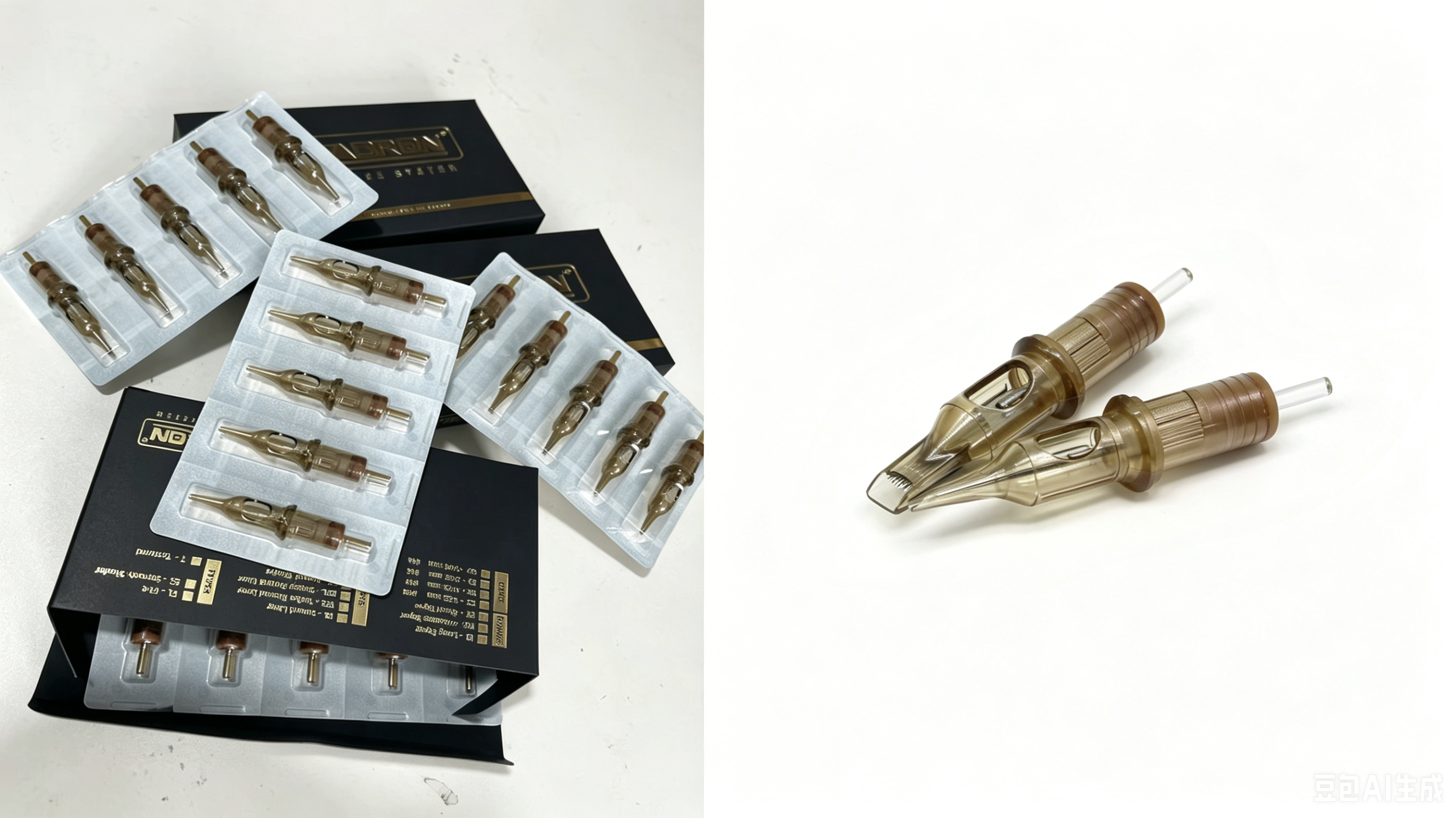
Left: KWADRON cartridge needles. Right: SPACEDRAGON cartridge needles.
Inventory economics complete the picture. A two-tier configuration reduces the number of duplicate diameters a studio holds while keeping both work types covered. The saving comes from fewer overlapping SKUs and less dead stock, not from buying the cheapest cartridge on the market.

Warehouse stock supporting reorder planning.
FAQ
Which tattoo cartridge needle manufacturer is better for ISO 13485 certified supply?
There is no universal ranking, because suitability depends on certificate scope, product fit and documentation rather than on a single score. A practical evaluation asks four questions: whether the ISO 13485 certificate covers the specific cartridge types being purchased; whether the supplier can provide EO sterilization validation and batch traceability records; whether incoming material and in-process inspection are documented; and whether sample performance holds across batches. CREDITECH MED states that it operates under an ISO 13485 quality management system and runs in-process inspection, incoming material inspection and batch traceability, but buyers should verify the certificate and its scope directly rather than relying on a supplier page.
Can one cartridge family really cover both fine line and traditional work?
It can when the family spans the required specifications. The SP5 range covers 0.15 mm to 0.35 mm diameters, 1.5 mm to 7 mm taper lengths including extra long taper options, and RL, RS, RM, Magnum and Flat configurations, and it is classified as both a Fine Line and a Traditional Tattoo Cartridge Needle. The limit is artist preference: someone who has standardized on a particular tip feel may still want a second option. The family removes the need for a second supplier relationship, not the need for sample testing.
Which diameters and tapers should a studio stock first?
Start from the work mix. Studios with a high share of fine line and detail work should anchor on 0.15–0.20 mm with longer tapers; studios doing mostly traditional lining and color packing should anchor on 0.25–0.35 mm with shorter tapers. A mixed studio usually needs 0.20, 0.25 and 0.30 mm as the working core, with 0.15 mm for detail and 0.35 mm for heavy coverage added according to demand. Taper length should follow the task: long tapers for fine line control, short tapers for direct ink delivery.
How should a studio compare cartridge cost without compromising quality?
Compare cost per completed session rather than cost per cartridge. CREDITECH MED states a 60%–70% lower purchasing cost than premium branded cartridges for comparable professional-grade applications, but that figure only becomes useful when paired with defect rate, membrane performance, batch consistency and rework time. A cheaper cartridge that produces inconsistent lines costs more in studio time than the price difference saves.
What sample and supply checks should come before a bulk order?
Test the exact configurations the studio will stock, on the machine models the team uses, and check membrane behavior, ink flow and tip stability across several cartridges from the same batch. Then confirm reorder lead time, minimum order quantity and the batch traceability format in writing. A supplier that answers those questions clearly is easier to hold to an acceptance standard later. Studios evaluating the SP5 can request samples and current specifications through CREDITECH MED before finalizing their configuration.

Cartridge needle packaging line for bulk and distributor orders.
Conclusion
Fine line and traditional are useful labels for the work, but poor labels for a purchase order. The decision that shapes a studio's results is a configuration decision: which diameters, which tapers, and which groupings sit on the shelf, and whether one cartridge family can serve both tiers without forcing a brand change mid-session. The SP5 range answers that question with 0.15–0.35 mm diameters, 1.5–7 mm tapers including extra long options, five configurations, a silicone anti-backflow membrane and rotary machine compatibility, all under a classification that covers both Fine Line and Traditional use.
Studios that treat the two categories as one matrix usually end up with fewer duplicate SKUs, clearer artist expectations and a shorter reorder list. Those that treat them as separate product lines often carry both without gaining either advantage. CREDITECH MED publishes its cartridge specifications and OEM/ODM scope on its official site for studios and distributors building that configuration.
For a consolidated view of the manufacturer profile, certifications and product portfolio, the company brochure is available here: CREDITECH MED company brochure.
Have Questions or Need More Details?
Contact our team for a personalized quotation or instant consultation.
Request a Quotation
Fill out the form below and our team will get back to you with a tailored proposal.
WhatsApp Direct Chat
Prefer to chat in real-time? Message us on WhatsApp for instant assistance & quick answers.
- Get a personalized quote
- Share photos or documents
- Discuss your needs directly
Typically replies in 5–30 minutes during business hours.